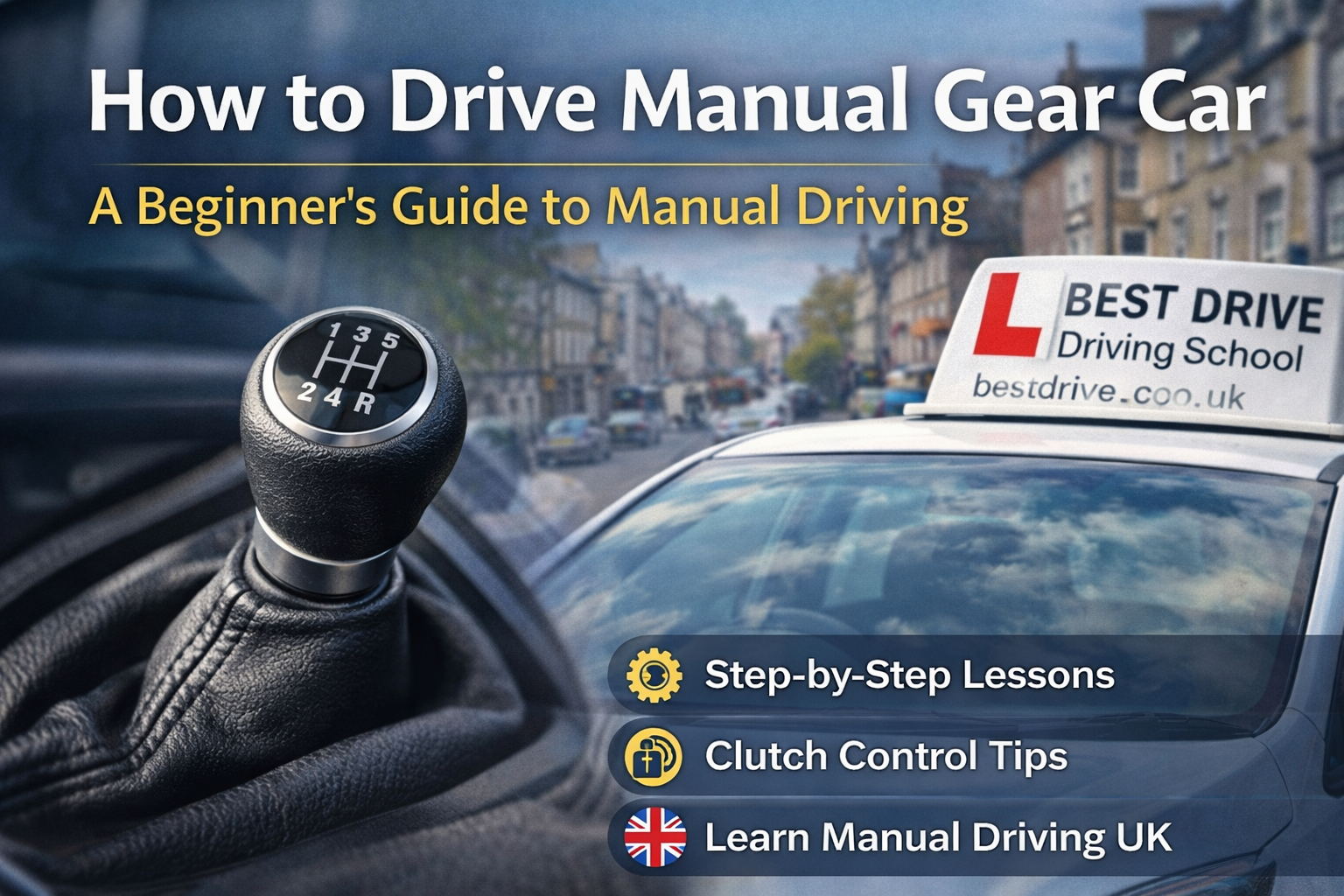
Manual driving is one of the most valuable skills a new driver can develop in the UK. Although it may feel challenging at the beginning, most learners become confident quickly once they understand clutch control and gear timing.
Many learners choose manual driving because it gives them more flexibility after passing their test. With the right support and regular practice, driving a manual car soon feels natural.
This guide explains how manual driving works and how beginners can build confidence step by step.
Why Manual Driving Is Still the First Choice for Many Learners
Across the UK, many learners still prefer manual driving lessons.
One important reason is licence flexibility. Passing your test in a manual vehicle allows you to drive both manual and automatic cars.
Another reason is better vehicle control. Manual driving helps learners understand how the car responds in different traffic conditions.
Manual cars are also often more affordable to buy and maintain. Because of this, they remain a practical choice for new drivers.
Understanding the Basics of Manual Driving
Before starting the engine, it helps to understand how manual driving works.
Manual vehicles use three pedals:
- clutch
- brake
- accelerator
The clutch plays the most important role in manual driving. It connects the engine to the wheels and allows smooth gear changes.
Most manual cars include five gears and one reverse gear. Each gear supports different speeds during your journey.
Once learners understand this system, manual driving becomes easier to manage.
Step-by-Step Manual Driving for Beginners
Learning manual driving becomes simpler when you follow a clear routine.
Adjust Your Seat and Mirrors First
Always begin manual driving by adjusting your seat and mirrors. A comfortable driving position improves control and awareness.
Start the Engine with the Clutch Pressed
Press the clutch fully before starting the engine. This prepares the vehicle for selecting first gear safely.
Select First Gear Smoothly
Move the gear stick into first gear while keeping the clutch pressed down.
This prepares the car to move forward safely during manual driving practice.
Find the Biting Point
Slowly release the clutch until the car begins moving. At the same time, gently press the accelerator.
Finding the biting point is one of the most important skills in manual driving.
Change Gears at the Right Time
As speed increases:
- Press the clutch
- change gear
- Release the clutch smoothly
Smooth gear changes help make manual driving comfortable and controlled.
How to Stop Safely During Manual Driving
Stopping correctly is just as important as moving forward.
Follow these steps:
- Press the clutch
- Press the brake gently
- Move into neutral
- Apply the handbrake if parking
Practising this routine improves confidence during manual driving lessons.
Common Manual Driving Mistakes Beginners Should Avoid
It is normal to make mistakes while learning manual driving.
Some common beginner errors include:
- releasing the clutch too quickly
- choosing the wrong gear
- forgetting mirror checks
- stopping without clutch control
With regular lessons, these mistakes improve quickly.
Tips to Improve Manual Driving Confidence Faster
Many learners progress faster when they follow simple learning habits.
Helpful tips include:
- Practising clutch control regularly
- staying calm during lessons
- listening carefully to the instructor’s guidance
- improving gear timing gradually
- focusing on smooth movements rather than speed
These habits make manual driving feel easier after only a few lessons.
When Should You Change Gears in Manual Driving?
Gear selection depends on vehicle speed and engine sound.
As a general guide:
- First gear moves the car forward
- Second gear supports slow traffic
- Third gear suits town driving
- Fourth gear supports a steady speed
- Fifth gear works well on faster roads
Understanding gear timing improves overall manual driving control.
Why Learn Manual Driving with Best Drive Driving School
Learning manual driving with professional instructors helps learners develop safe habits early.
At Best Drive Driving School, lessons focus on step-by-step progress rather than rushing through skills.
Instructors help learners improve:
- clutch control
- gear selection
- junction awareness
- mirror routines
- confidence before the driving test
This structured approach supports learners throughout their manual driving journey.
Benefits of Manual Driving for New Drivers
Manual driving offers several long-term advantages.
For example:
- Greater vehicle choice after passing
- improved road awareness
- better control in heavy traffic
- lower vehicle purchase costs
Because of these benefits, many learners continue choosing manual driving each year.
Conclusion
Learning manual driving may seem challenging at first. However, with regular practice and professional guidance, most learners become confident quickly.
Manual driving also provides long-term flexibility on UK roads. With support from Best Drive Driving School, learners can develop safe habits and prepare successfully for their practical test.
FAQs About Manual Driving
Is manual driving difficult for beginners?
Manual driving can feel challenging at first. However, most learners gain confidence after practising clutch control and gear changes.
How long does it take to learn manual driving?
Most learners need between 35 and 45 hours of lessons, depending on confidence and practice time.
Why is clutch control important in manual driving?
Clutch control allows smooth movement and safe gear changes during manual driving.
Can I drive automatic cars after learning manual driving?
Yes. Passing your test in a manual car allows you to drive both manual and automatic vehicles.
Is manual driving still useful in the UK today?
Yes. Manual driving remains popular because it offers greater vehicle control and strong road awareness.
You can also explore helpful driving guides and learner tips published on platforms like Blogspot, WordPress, Medium, and Weebly, where many instructors and driving schools, such as Driving Lessons, share useful advice for new drivers.