
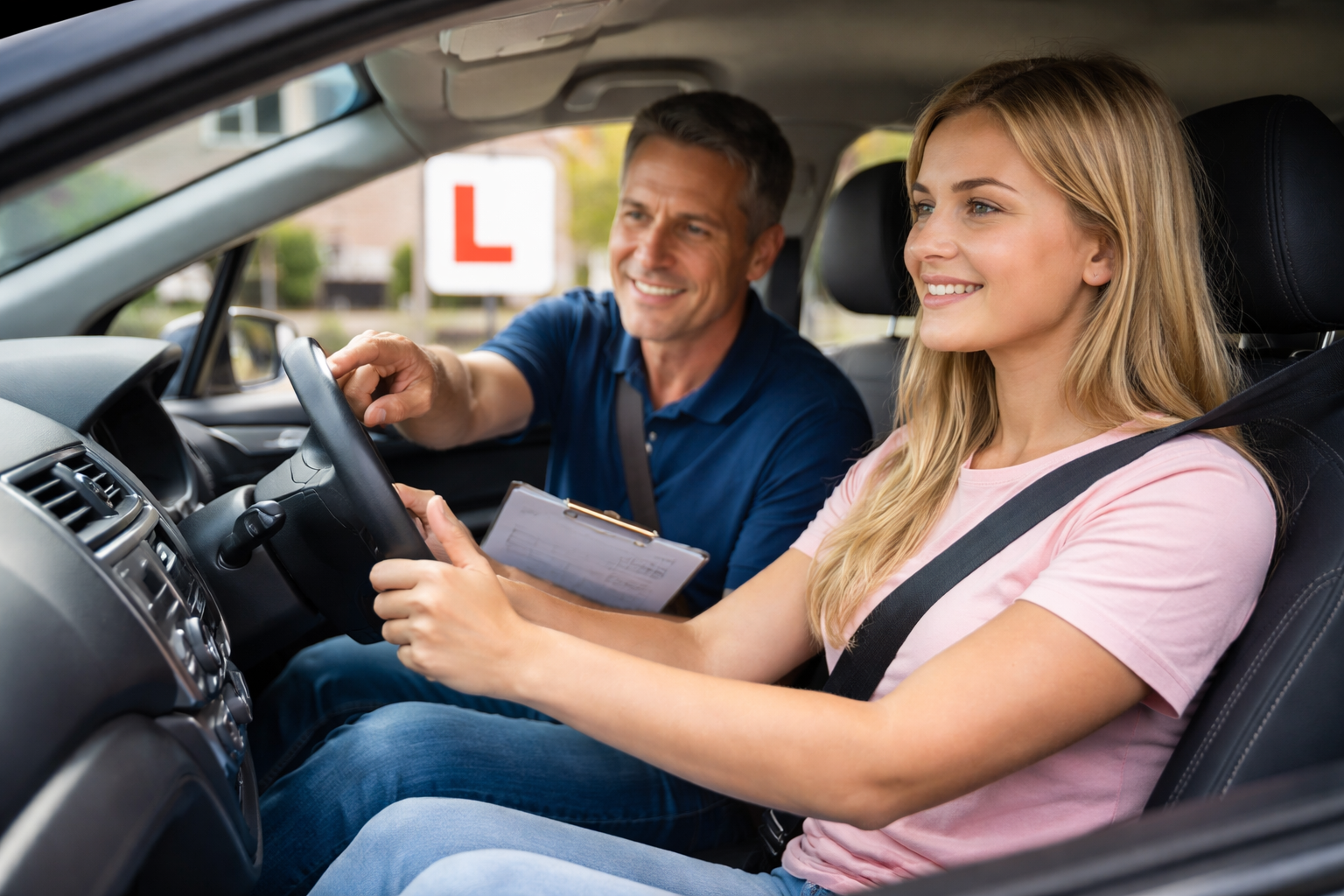
Learning how to drive a car is an awesome achievement. It means freedom and self-reliance on the streets. Initially, driving can be difficult. But when paired with guidance and practice, it is soon easy and fun.
This tutorial will tell you what every new player should know. Here are some tips to help you start safely, whether you’re heading to your first lesson or just looking to get more comfortable before taking the test.
Understanding the Basics Before You Start Driving
You need to know the primary controls before moving the car. Having an understanding of each control helps to keep you calm and focused.
It is important to be familiar with the following:
- The steering wheel
- Accelerator pedal
- Brake pedal
- Press the clutch in mechanical transmissions.
- Gear selector
- Mirrors and indicators
- After learning about these controls, you will feel more prepared for your first ride.
Adjust Your Seat and Mirrors First
Comfort and visibility are critical for safe driving. Always make sure to change position before starting the engine.
Make sure you:
- Sit up straight and maintain good visibility of the road ahead.
- Have easy access to pedals!
- Set mirrors to get a full view of the back.
- Leave both hands loose on the steering wheel
The correct sitting position provides increased control and confidence.
Start the Engine Safely
Once you know what to do, it’s easy to start the car. If you have a manual transmission vehicle, make sure the gear is in neutral first.
Then:
- Fully push in the clutch.
- Rotate the key or press the start button
- Do not remove your foot from the brake
- Don’t panic and remain alert for movement
These steps help you to get things off to a great start.
Moving the Car Forward Smoothly
Once the engine is started, you may start moving slowly.
To proceed in a safe manner
- In the manual vehicles, press the clutch gently.
- Select first gear
- Release the handbrake
- Gently press the accelerator
- Slowly release the clutch.
This process can be done more easily with practice.
Steering the Car with Confidence
The more you practice, the better you will be at steering. Both hands on the steering wheel and relax.
Remember to:
- Turn smoothly
- Avoid sudden movements
- Don’t look down, look ahead
- Follow the road in the natural direction
Safe steering habits will keep you safe in all situations.
Changing Gears at the Right Time
Control of the gear is a critical element in manual driving. But practice makes them comfortable, though.
Typical situations for changing gears are when:
- The engine starts to make more noise
- The car gains speed
- There is a need for greater control over slopes
Shifting gears smoothly enhances driving comfort.
Using Mirrors and Signals Correctly
Your observation is needed to keep your awareness about you. So, be sure to look in mirrors before turning.
You should check mirrors when:
- Making a left or right turn –
- Changing lanes
- Slowing down
- Stopping the car
Use clear signalling to communicate with other drivers.
Learning How to Stop the Car Safely
It is just as important to make a safe stop as it is to make a safe start.
Follow these steps:
- Check mirrors first
- Release the accelerator
- Gently apply the brakes.
- Press the clutch in manual cars
- Slow down and come to a smooth and safe stop.
The confidence is developed in lessons by controlled stopping.
Practising Safe Driving Habits from the Start
Safe habits help you become a responsible driver. The sooner the better to learn them.
Important habits include:
- Keeping a safe distance from other vehicles
- Following speed limits
- Relax in traffic
- Watching pedestrians carefully
These practices increase safety and confidence.
Why Learning with a Professional Instructor Helps
Practice is essential, but learning is simpler with the guidance of a trained instructor. A knowledgeable teacher makes all the steps clear and corrects errors early.
Learners can frequently:
- Build confidence faster
- Improve observation skills
- Get more ready for the driving test
- Don’t feel stressed out in lessons
- This assistance facilitates learning.
Staying Calm During Your First Driving Lessons
It’s normal to be nervous in the beginning! But with practice, confidence builds up rapidly.
To stay calm:
- Take one step at a time
- Follow directions carefully:
- Practise regularly
- Be gentle on yourself
In no time at all, driving becomes second nature and fun.
FAQs About How to Drive a Car
How long does it take to learn how to drive a car?
Learning time varies for each person. But most learners progress in a steady manner with regular instruction from a qualified teacher.
Does driving a stick change vehicle prove more difficult than an automatic?
A gear control is necessary for manual driving. But with practice and teaching, many are comfortable learning.
Before starting the engine, what should I do?
Set mirrors and seat before adjusting mirrors and seat. Afterwards, verify that the gear is in the proper position and leave your foot on the brake until the engine has been started.
What are some methods for the inexperienced to become better at steering?
Steering control improves with practice and using both hands in a relaxed manner when steering, looking forward.
Why is it important to perform a mirror check when driving?
Mirror checks can assist drivers in being aware of vehicles in the vicinity. This awareness will make turning and lane changing safer.
Is it best for beginners to learn with an instructor?
Yes. Beginners learn much more quickly by having a trained instructor teach them, and are better prepared. How to drive a car on the road safely.
You can also explore helpful driving guides and learner tips published on platforms like Blogspot, WordPress, Medium, and Weebly, where many instructors and driving schools, such as Driving Lessons, share useful advice for new drivers.