
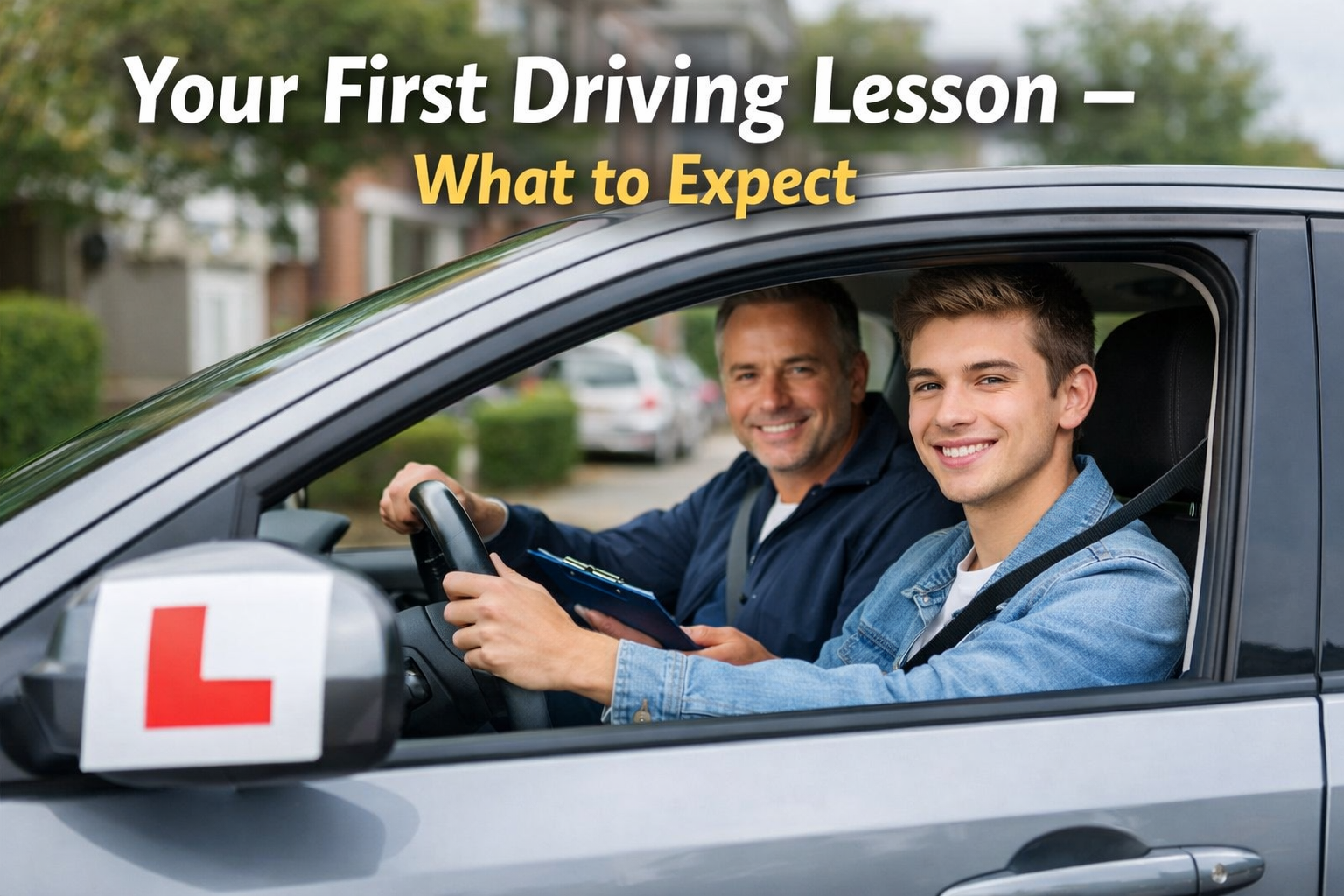
Starting your first driving lesson is an exciting step toward independence. However, many learners feel nervous because they are unsure what will happen. The good news is that instructors expect beginners and will guide you step by step.
In this guide from Best Drive, we explain what you do on your first driving lesson, how the lesson usually works, and how you can prepare for it. By the end, you will feel more confident about getting behind the wheel.
Why Your First Driving Lesson Matters
Your first lesson is not about driving perfectly. Instead, it focuses on building confidence and understanding the basics of the car.
During this lesson you will learn:
-
How the car controls work
-
How to move off safely
-
How to stop the car smoothly
-
Basic road awareness
Most instructors begin slowly and choose quiet roads so you can practice without pressure. This helps you stay calm while learning new skills.
What Do You Do on Your First Driving Lesson?
Many learners ask this question before their first session. Although every instructor has their own teaching style, the general structure is quite similar.
1. Meeting Your Instructor
First, your instructor will introduce themselves and ask a few simple questions.
For example, they may ask:
-
Have you driven before?
-
Do you have any road experience?
-
Do you have your provisional license?
This short conversation helps the instructor understand your experience level and adjust the lesson accordingly.
2. Driving to a Quiet Practice Area
You usually will not drive immediately. Instead, the instructor will drive you to a quiet residential street or industrial area.
This approach keeps the lesson safe and allows you to learn without heavy traffic around you.
3. Learning the Car Controls
Once you reach the practice area, you will switch seats and begin learning about the car controls.
Your instructor will explain:
-
Steering wheel
-
Accelerator pedal
-
Brake pedal
-
Clutch (for manual cars)
-
Gear stick
-
Handbrake
-
Indicators and mirrors
You may also learn the cockpit drill, which involves checking doors, seat position, steering, seatbelt, and mirrors before driving.
4. Moving Off and Stopping
After learning the controls, your instructor will show you how to move the car.
You will practice:
-
Moving off safely
-
Using mirrors before moving
-
Accelerating gently
-
Stopping the car smoothly
Most beginners practice moving off and stopping several times during the first lesson to build confidence.
5. Basic Steering and Simple Turns
If time allows, you may also learn simple steering techniques. Some instructors introduce basic left and right turns on quiet roads.
However, the main goal of the first lesson is comfort and control, not advanced driving.
What Should You Bring to Your First Driving Lesson?
Before your lesson, make sure you bring a few important items.
Essential items include:
-
Your provisional driving license
-
Glasses or contact lenses if needed
-
Comfortable clothing
-
Flat shoes with thin soles
Comfortable footwear is especially important because it helps you feel the pedals more easily.
Tips to Stay Calm During Your First Lesson
Feeling nervous is completely normal. In fact, most learners feel the same way during their first lesson.
Here are a few tips to help:
1. Listen carefully
Focus on your instructor’s guidance and follow each step slowly.
2. Ask questions
If something feels confusing, simply ask. Instructors expect questions.
3. Don’t worry about mistakes
Everyone stalls the car or makes small mistakes at first. That is part of learning.
4. Take your time
Smooth and controlled driving matters more than speed.
How Long Is a First Driving Lesson?
Most driving schools offer:
-
1-hour lessons
-
90-minute lessons
-
2-hour lessons
A longer lesson allows more practice time, especially when learning the basics.
Common Mistakes Beginners Make
During the first lesson, beginners often:
-
Press pedals too hard
-
Forget mirror checks
-
Turn the steering wheel too quickly
-
Stall the car
These mistakes are completely normal. Your instructor has dual controls and can assist if needed.
e.g ( blogspot.com or wordpress.com, Medium.com, Weebly.com)
FAQ’s About First Driving Lessons
1. Will I drive on my first driving lesson?
Yes, in most cases you will drive during the first lesson. However, the instructor usually drives to a quiet road before letting you take the wheel.
2. What do you do on your first driving lesson?
You typically learn the car controls, cockpit checks, moving off, stopping, and basic steering. The focus is on building confidence rather than driving perfectly.
3. How long does it take to learn to drive?
Many learners need around 40–50 hours of professional lessons plus additional practice to become test-ready.
4. Do I need to pass my theory test before starting lessons?
No. You can start driving lessons before passing the theory test. However, you must pass the theory test before booking the practical test.
5. What if I feel nervous on my first lesson?
Feeling nervous is normal. Good instructors teach beginners every day and will guide you at a comfortable pace.
6. Can I fail my first driving lesson?
No. Driving lessons are for learning, not testing. Mistakes are expected and help you improve.
Final Thoughts
Your first driving lesson is simply the beginning of your journey as a driver. It focuses on understanding the car, learning basic controls, and building confidence on quiet roads.
If you prepare well and stay relaxed, the experience will feel much easier than you expect.
At Best Drive, experienced instructors support learners at every stage. So whether you are completely new to driving or looking to improve your skills, your first lesson can be a positive and exciting step toward becoming a safe driver.