
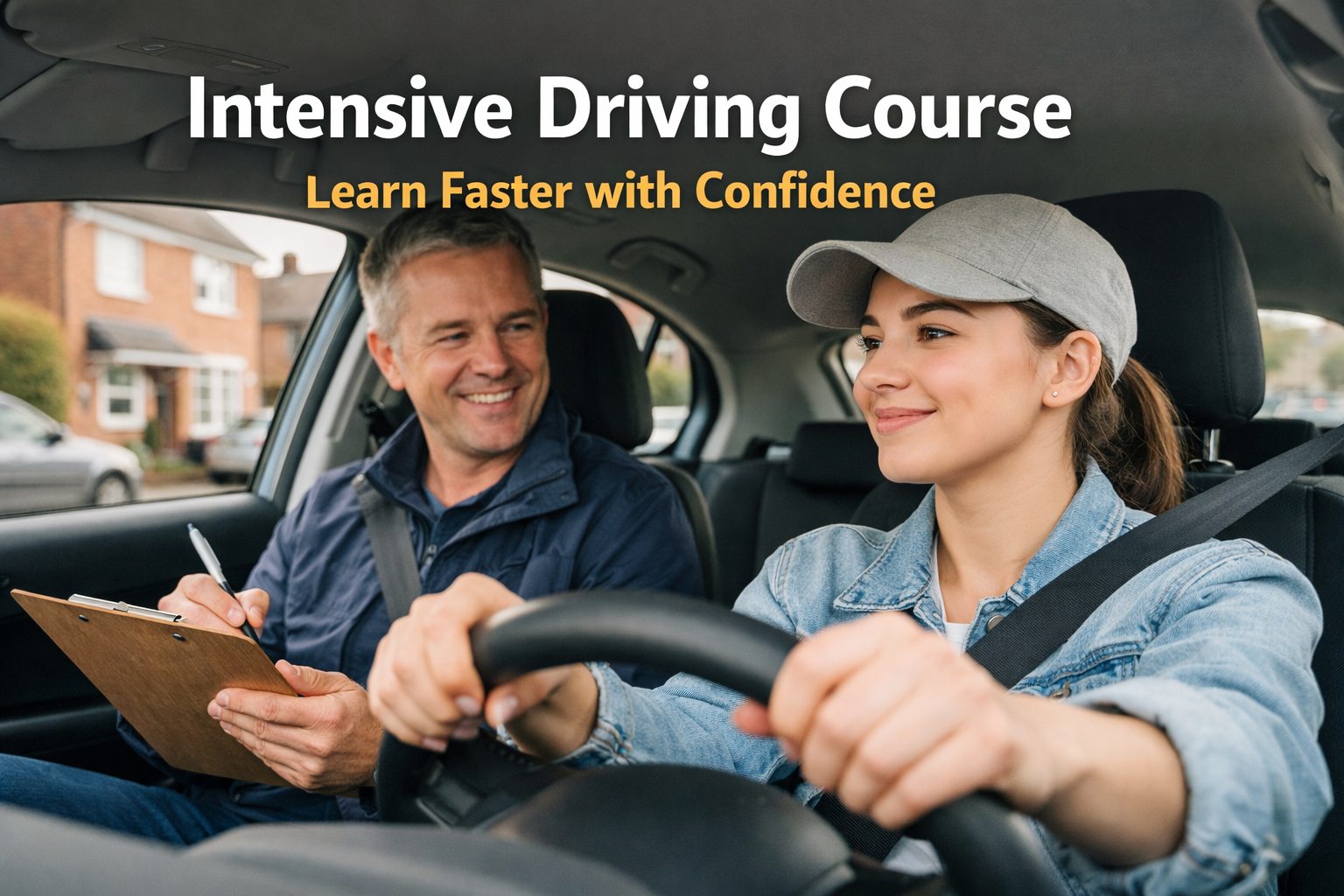
Driving is an important milestone in life. But not all of them would want the process to take several months. This is where an intensive driving school program is a good option. It will assist you in learning rapidly with high confidence.
In Best Drive, there are often learners who want to progress faster, while still maintaining the quality of teaching. With proper planning and the help of veteran drivers, that can be possible with an intensive driving course.
So let’s dive in and see how they function, and why so many students across the UK are now opting for these courses.
What Is Intensive Driving?
Intensive driving is learning to drive in a shorter period of time than usual weekly lessons. You don’t have to spread lessons out over a few months, but over a few days or weeks.
For example:
- Some pupils complete in one week
- Others opt for a 2-week plan
- Others like blocks that are flexible, short, and intense.
Lessons are grouped, thus your memory remains fresh, and your skills improve rapidly.
This means that for many learners, they feel more confident at the wheel earlier.
How an Intensive Driving Course Works
Typically, an intensive driving course starts with an assessment lesson. This will assist your teacher in determining where you are currently.
After that:
- A learning plan is drawn up
- Lessons are closely packed together.
- Skills are developed in stages.
- A practice test with mock questions is provided
- Practising for the test is the last step.
The one structured approach will keep the learners focused and motivated.
Who Should Choose Intensive Driving?
All learners do not learn in the same manner. But for many, intensive lessons work out.
They’re perfect for you if you:
- Looking for a license in a hurry for work
- Are you getting ready for University travel?
- Have had some lessons previously
- Prefer learning in a shorter time frame
- Feel confident practising regularly
However, nervous pupils too can benefit if they are suitably fed and time themselves.
This is where a supportive instructor can make a great difference.
Benefits of Intensive Driving
Time is often a reason why learners opt for intensive driving. However, there are a number of other benefits.
Faster Learning Progress
Lessons are grouped, and you are more likely to remember the skills. This will make practices more consistent.
Stronger Confidence
Comfort develops quickly with regular driving. Learners, as such, become more relaxed on the road as a consequence.
Better Test Preparation
Learning is more effective in a shorter time when practised in mock tests.
Flexible Lesson Options
Courses may be scheduled to accommodate you. This is why some students opt for the full-day classes. Others go for a shorter duration of the day.
Should an Intensive Driving Course be used for the novice driver?
Yes, intensive courses are great for beginners! But the important thing is the lesson structure.
Instructors at Best Drive set the pace to fit the comfort level. So even first-timers can do well without being rushed.
When it comes to confidence, it is always before speed.
How Long Does Intensive Driving Take?
The duration of an intensive course will vary according to your experience.
For example:
- However, beginners may require more hours to get accustomed to the course.
- Partial learners require fewer sessions.
- The refresher learner finishes the course in a short period.
During an assessment lesson, you will determine the best plan for you.
This helps you to maintain efficiency in your learning and remain realistic.
Tips to Prepare for Intensive Driving Lessons
Practice does make a difference. Students who come in prepared tend to move more quickly.
These are a few tips that will help you:
- Driving Theory First is updated. Driving Theory First has been updated.
- The knowledge of road signs helps you to concentrate more during practical lessons.
- Keep a positive attitude and remain relaxed.
- Learners learn at a quicker rate when they are confident. Don’t get too upset if you make any errors.
- Practice Between Lessons
- Practice with a supervisor, if available. Any amount of practice will help.
Get Enough Rest
Driving requires concentration. A clean slate makes it easier to perform.
What Happens During the Driving Test Preparation Stage?
At the end of your intensive driving course, your instructor will teach you in preparation for the test.
This usually includes:
- Independent driving practice
- Mock driving tests
- Manoeuvre revision
- Junction awareness training
- Confidence-building exercises
These steps will help you in actual test scenarios.
Consequently, the learner has confidence and not nervousness.
Why Choose Best Drive for Intensive Driving?
The selection of the best driving school is as important as that of a course.
At Best Drive:
- Lessons are taught to the standard set by the DVSA.
- The teachers are very gentle and knowledgeable.
- Courses are aligned to the ability of the learner.
- Flexibility with scheduling is offered
- Staying focused on confidence-building is still important.
As a consequence, pupils develop well and safely.
Frequently Asked Questions About Intensive Driving
When will I finish the intensive driving course?
Some pupils pass in 1-2 weeks. But it’s a progression that comes with experience and confidence.
Are weekly driving courses easier than intensive driving courses?
Not necessarily. Many learners actually find it easier, as skills are still fresh between sessions.
Can nervous learners take intensive lessons?
Yes. Nervous students can do well with the right teaching support.
Do I have to pass the theory test before?
You are better off taking your theory exam before beginning your course. This will mean you can take your practical test earlier.
An intensive driving course will last for how many hours?
Course length varies. The number of hours required for beginners may be greater than that required for learners who have some experience.
Will I be ready for the driving test after the course?
The vast majority of students will be prepared for tests as long as they are in regular attendance and taking the teacher’s advice.
You can also explore helpful driving guides and learner tips published on platforms like Blogspot, WordPress, Medium, and Weebly, where many instructors and driving schools, such as Driving Lessons, share useful advice for new drivers.