
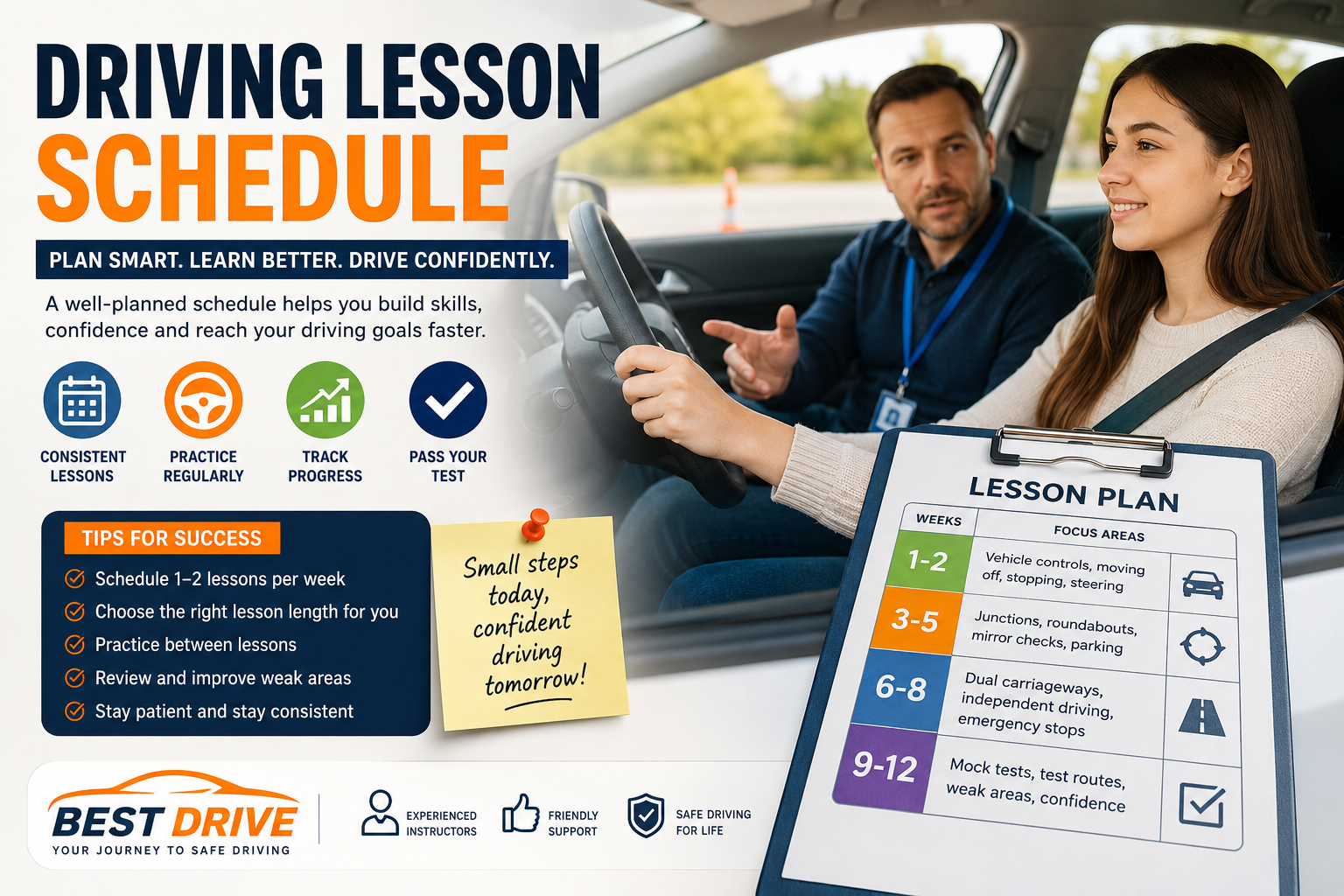
A quality driving lesson schedule assists you in being consistent. It also allows you sufficient time to practice what you learned in each session. There are many learner drivers who want to know how many lessons they should take or the length of time each lesson should be. It depends on your self-assurance, on how soon you can learn new skills and on how much time you have.
The average amount of lessons for the majority of learner drivers in the UK is between 45 and 60 hours of professional driving training and 20-30 hours of private practice.
Why a Driving Lesson Schedule Matters
If lessons are set up correctly, students acquire skills slowly. This helps develop a good driving routine and lowers anxiety while driving. A regular timetable also ensures that students recall the content they learned in their previous lessons.
Many learners lose essential skills that could be covered between sessions if they do not have a plan. This means these students waste valuable lesson time making revisions to overworked topics rather than advancing.
With a structured approach, you will be able to:
- Build confidence steadily
- Improve road awareness
- Practice manoeuvres regularly
- Get ready to take the test quickly
- Reduce overall learning costs
- One of the most critical factors to success is consistency.
How Often Should You Schedule Driving Lessons?
Most driving instructors advise 1-2 lessons per week. Learner comments on the internet suggest that weekly two-hour lessons are popular as they are just long enough to drive but not too long.
Two lessons a week will help learners to progress faster if possible. This helps to refresh your mind on driving. It also decreases the need to repeat previous subjects.
But your personal schedule is important as well. Some students juggle work, university and/or family commitments. If so, a good lesson once a week can be an outstanding option.
Best Length for Driving Lessons
In the UK, a typical driving lesson is:
- 1 hour
- 1.5 hours
- 2 hours
A recent trend is for many instructors to opt for two-hour lessons as students get more time behind the wheel.
Lessons that are shorter will be easier in the beginning. However, they can be a hindrance in your development as it takes time out for skills to be discussed and for the travelling to practice sites. Longer lessons enable learners to settle into driving naturally.
Shorter sessions can be effective in the first few weeks for nervous beginning players.
Sample Beginner Driving Lesson Schedule
The following reflects a sample balanced learning plan for new drivers.
Weeks 1–2
- Learn vehicle controls
- Work on getting out of the starting position and stopping.
- Basic steering and clutch control
- Quiet residential roads
Weeks 3–5
- Junctions and roundabouts
- Mirror checks
- Lane positioning
- Basic parking practice
Weeks 6–8
- Dual carriageways
- Independent driving
- Emergency stops
- Reverse manoeuvres
Weeks 9–12
- Mock driving tests
- Test route practice
- Improving weak areas
- Confidence building
All learners learn at their own rate. For some, more practice is required before moving on.
Should You Practice Between Lessons?
Yes. The difference between private practice and public practice is big. Studies have proven and proven that students who study outside of class pass faster.
Private practice will aid in reinforcing skills acquired in lessons, if a suitable car and supervising driver are available.
You can practice:
- Parking
- Gear changes
- Hill starts
- Busy traffic situations
- Night driving
Confidence is boosted even with short practice sessions.
Intensive Courses vs Weekly Schedules
Some students opt for fast driving courses. These include several hours per day driving for one or two weeks.
Fast learners with some experience may turn out to be good candidates for intensive schedules. But beginners are often less stressed and easier to handle with weekly lessons.
Weekly Schedules give learners a chance to learn information slowly. They also give time to reflect and improve outside of lesson time.
Common Mistakes When Scheduling Driving Lessons
The practice of catching two teachers at the same time on the same instrument.
There are long gaps between lessons, which retard progress. Pupils tend to lose important skills and take time to repeat previous learning.
Overloading Your Schedule
Excessive learning in a week can cause mental fatigue. It takes concentration to get a vehicle on the road, particularly for novices.
Skipping Private Practice
Learners who do not drive outside of lessons could require a higher amount of professional tuition.
Not Reviewing Weak Areas
A good schedule provides time to develop weaker skills instead of being on a fast track to the testing date.
How to Stay Motivated During Driving Lessons
Learning to drive can be frustrating at times. Oftentimes, it takes time to make progress. However, staying consistent is the key.
Follow these easy suggestions:
- Make small goals for driving.
- Check your progress each week
- Celebrate improvements
- Practice regularly
- Don’t get upset when things go wrong
Keep in mind that all the knowledgeable drivers were once novices.
Choosing the Right Driving Instructor
Your instructor can be a key factor in your learning process. A patient and supportive teacher can help you relax during lessons.
When choosing an instructor, seek out:
- Clear communication
- Flexible scheduling
- Positive reviews
- Structured lesson plans
- Calm teaching style
Best Drive provides individualised guidance of the learning pace for the learners.
Final Thoughts
A smart driving lesson schedule will be able to help you turn into a safer driver who is more confident. Slow and steady is better. If you select weekly lessons or a more intensive schedule, steady progress will be assured with regular practice and good planning.
There is a key that comes with this: Patience and trust in the process. Each lesson takes you a step closer to passing your driving test and taking the wheel of the car.
FAQs About Driving Lesson Schedules
What is the number of driving lessons required by most learners?
The majority of learners in the UK want approximately 45 hours of professional lesson time and some private practice.
Are weekly driving lessons once a week sufficient?
Yes. If you practice regularly between lessons, one lesson a week may be sufficient.
Do 2-hour driving lessons of driving make any sense?
Some teachers prefer 2-hour lessons as this gives more time for practical driving.
When will I pass my driving test?
Some students pass in a few months, and some take longer. Both the speed of learning and the amount of practice time are important.
To take intensive driving lessons or not?
Some learners would benefit from intensive lessons, which can allow them to make rapid progress. But for the novice, tutoring once a week makes it possible for him to make slow improvements.
Will there be fewer lessons required when I’m in private practice?
Yes. Time spent in extra practice, outside of the actual professional lesson, can have a positive impact on confidence and decrease the number of hours spent in professional lessons.
At what age is it best to learn to drive?
In the UK, many learners start at the age of 17. Adults, though, of any age can successfully learn to drive.
When can I take my test?
Your teacher will typically suggest a test when you have had sufficient time to drive safely and confidently with little supervision.
You can also explore helpful driving guides and learner tips published on platforms like Blogspot, WordPress, Medium, and Weebly, where many instructors and driving schools, such as Driving Lessons, share useful advice for new drivers.